Standing View or Seated View: What Changes Your Attention?
Standing or seated stadium views change what you notice in play; choose a viewpoint that helps you follow movement, spacing and the next phase.
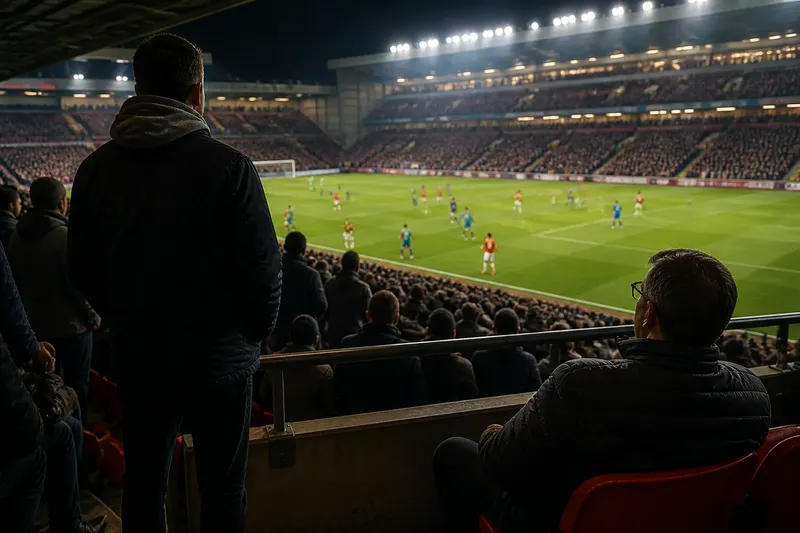
At a crowded match, a supporter rises as the ball moves towards the far touchline. Someone behind leans sideways; a few rows away, another spectator stays seated and watches the players spread out. Standing and seated views do not simply offer different heights. They guide attention towards different parts of the game.
If you are choosing between a standing view and a seated view, think less about finding a perfect picture and more about how you want to follow the shape of play. The useful question is not only whether you can see the ball, but whether you can keep track of the movement around it.
What does a standing view bring into focus?
Standing tends to make a crowd’s reactions more visible. A surge of bodies can signal that an attack is building before you have picked out the ball. Faces turn together, shoulders lift, and the people around you become part of the view. That can make a standing section feel especially connected to the match’s changing mood.
From a standing position, your gaze can shift freely between the pitch and the people nearby. You might watch a winger receive the ball, then glance along the line to see whether teammates are pushing up. If the action moves quickly, changing your posture can help you keep it in view.
But a raised posture does not automatically create a clearer view. If the rows ahead are also standing, the pitch may appear in fragments between shoulders. The people in front may move as play develops, so the view can keep changing even when your place does not.
Standing also brings the nearby crowd into your attention whether or not you want that. Chants, clapping and sudden movement can make the match feel shared, though they can also pull your eyes from a quiet build-up at the opposite end. This is a genuine trade-off: the crowd’s response is part of what you see, not merely background to it.
Why can sitting help you read the formation?
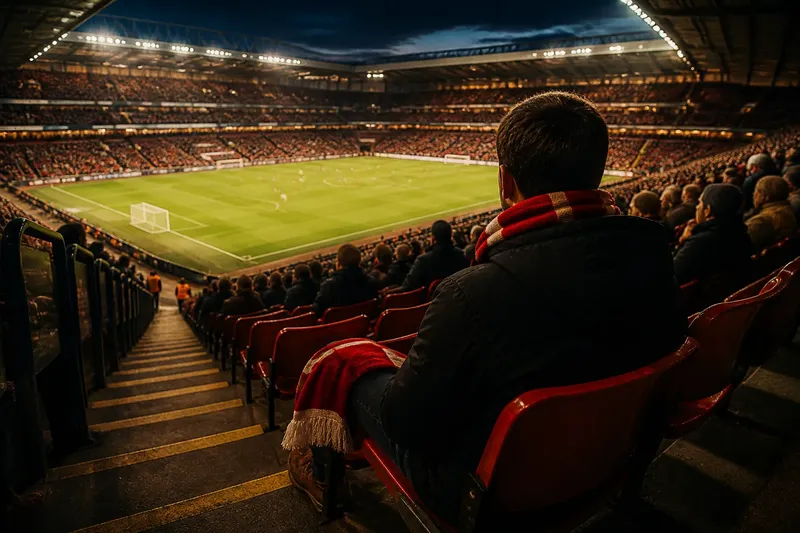
Seated spectators often have a steadier reference point. With less movement directly in front, it may be easier to compare players’ positions as a phase develops. You can notice a defender holding the line, a midfielder drifting into open grass, or a forward waiting between opponents rather than following only whoever has the ball.
That broader reading can matter when play is slow. Imagine you want to understand why a team keeps switching the ball from one side to the other. From a seated view, you may be able to follow the distance between the wide players and the central group, then see how the defence shifts in response. The observable benefit is not a magically complete view; it is a clearer chance to notice how the pieces move together.
A seat can also make sustained watching more comfortable for some spectators. You can settle into one position, keep your eyes on a particular area and return to the same sightline after looking away. That can suit someone following tactical patterns, a particular player’s movement off the ball, or the way a defensive line responds to pressure.
There are limits. A seated angle may make it harder to judge the depth between players, especially when bodies overlap in the same line of sight. The far corner, a low pass or a player screened by others can disappear from view. A seat offers steadiness, not an all-seeing camera angle.
How does each view shape attention across a match?
Think of attention as a choice between tracking the ball and reading the space around it. Standing often makes it natural to react to movement and to the crowd’s changing energy. Sitting can encourage a more settled scan across the pitch, especially when the action is unfolding away from the ball.
Neither posture owns one kind of attention. A seated spectator can be swept into a sudden counter-attack; a standing spectator can patiently study a defensive shape. Still, the physical rhythm matters. Frequent movement around you may interrupt a long look at the far side, while holding a steady position can make it easier to compare one phase with the next.
Say you are deciding between two available areas at a ground. One is a lively standing section where supporters rise and shift with attacks; the other is a seated block with a more settled view across the pitch. If your main aim is to feel the crowd’s response as it gathers, the first may suit you. If you want to watch how the teams open and close space, the second may be the more comfortable starting point. The useful result is a choice based on what you hope to notice, rather than a promise of an unobstructed view.
What should you consider before choosing a place?
- Your main focus: If you follow one player, look for a sightline that keeps their usual area visible. If you follow the team shape, favour an angle that shows more of the pitch at once.
- Movement in front: Consider whether spectators nearby are likely to stand, sit or shift during play. A view that works in a quiet moment may change when an attack reaches the end in front of you.
- Your preferred rhythm: A lively section may suit you if you enjoy reacting with the crowd. A steadier place may help if you like to watch longer passages without continually adjusting your posture.
- What you can comfortably maintain: Think about whether standing or sitting for extended periods suits you. If access or comfort affects your choice, ask the venue about the options available.
- The angle across the pitch: A view from the side can make spacing and movement easier to compare; an end-on view may make approaches towards that goal feel more immediate. Neither angle tells the whole story.
It is not worth trying to calculate the perfect row from a diagram alone. Seating plans can show broad sections, but they cannot tell you exactly how people nearby will move or what will hold your attention once play begins. A practical preference is more useful than chasing an idealised view.
Which view suits the way you watch?
Is standing better for following the ball?
It can feel easier to adjust your posture as play moves, especially when the crowd reacts together. But if people ahead remain standing, that movement may not improve your sightline.
Is sitting better for seeing team shape?
A steady seat can help you scan the spaces between players and compare their positions. The result depends on the angle and on whether other spectators block parts of the pitch.
Can you follow the game from behind a goal?
An end-on view can make attacks towards that end feel direct and vivid. It may be harder to judge distances across the pitch, so it suits some ways of watching better than others.
Should you choose the loudest section?
Choose it if shared reactions and crowd participation are part of what you want from the match. If you prefer to study quieter movement, a less animated area may help you hold attention on the play.
What is the most useful way to decide?
Before buying a ticket, name the thing you most want to notice: a particular player, the team’s spacing, attacks at your end, or the crowd responding together. Then consider whether standing or sitting is more likely to support that attention, while allowing for people moving around you.
Standing and seated views each leave something out. One can bring the crowd’s movement close; the other can make it easier to watch the geometry of play. The best choice is the one that helps you keep returning to the part of the match you came to see, even when the ball—and everyone’s attention—moves somewhere else.